When Is a Prenuptial Agreement Not Enforceable?
- DK Lucas

- Aug 12
- 7 min read
Key Takeaway
A prenuptial agreement in Pennsylvania can be thrown out if it was signed under duress, without proper disclosure, or without voluntary consent.
Courts look closely at the circumstances surrounding signing, not just the document itself, when evaluating whether a prenup is valid.
Pennsylvania follows the Uniform Premarital Agreement Act, which sets specific legal standards a prenup must meet to hold up in court.
Working with an experienced family law attorney before signing gives you the strongest protection if your agreement is ever challenged.
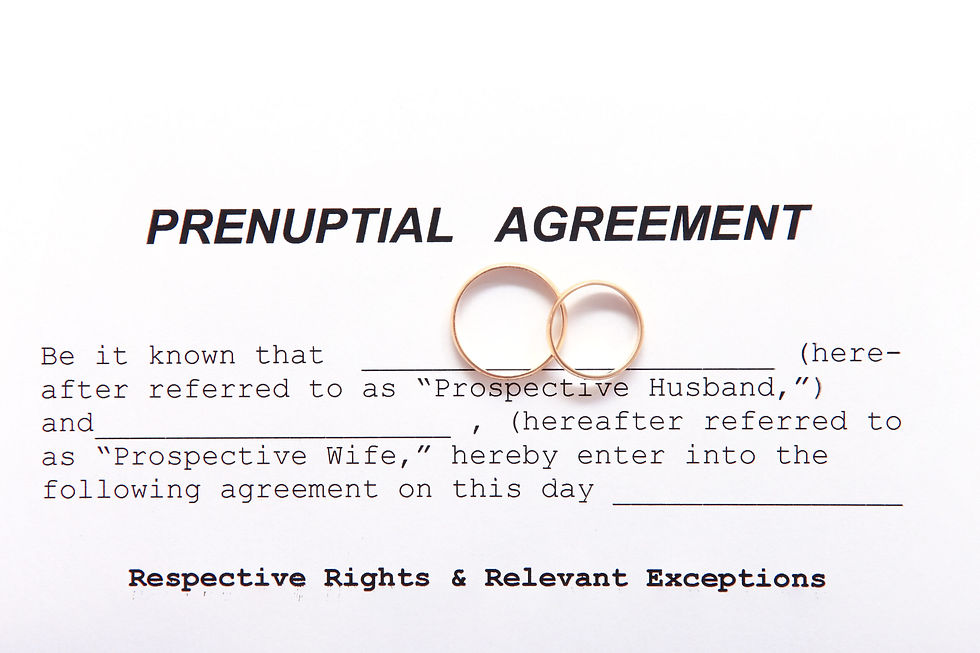
You signed a prenuptial agreement before you got married, or your spouse did, and now you are facing divorce and wondering whether that document will actually hold up. It is a question more people ask than you might expect, and the answer is not always straightforward. A prenuptial agreement that looks solid on paper can still be challenged, and in some cases, a Pennsylvania court will set it aside entirely.
The stakes are real. Property division, spousal support, and financial security can all hinge on whether your prenup is enforceable. If you are navigating this uncertainty in Greensburg or anywhere across Westmoreland County, understanding what makes a prenuptial agreement invalid in Pennsylvania is the first step toward protecting yourself. Our Family Law team at David K. Lucas and Associates PLLC is ready to help you make sense of what you are facing.
What Makes a Prenuptial Agreement Invalid in Pennsylvania?
An invalid prenuptial agreement in Pennsylvania is one that fails to meet the standards set by the Uniform Premarital Agreement Act, which Pennsylvania adopted to govern these contracts. Courts do not automatically honor a prenup simply because both parties signed it. There are specific conditions that must be present, and if any of them are missing, the agreement may not survive scrutiny.
The most common grounds for invalidating a prenup include lack of voluntary consent, inadequate financial disclosure, and unconscionability. If one party was pressured into signing, did not have access to complete information about the other's assets, or if the terms are so one-sided that no reasonable person would agree to them, the court has grounds to set the agreement aside.
Circumstances That Can Void Your Prenup
Here is what Pennsylvania courts examine when a prenuptial agreement is challenged:
Lack of voluntary consent. If one party was pressured, threatened, or given the agreement the night before the wedding with no time to review it, a court may find the signing was not truly voluntary.
Inadequate disclosure. Both parties must fully and fairly disclose their assets and liabilities before signing. Hiding property, income, or debt can be enough to invalidate the entire agreement.
No independent legal counsel. While Pennsylvania does not require each party to have their own attorney, signing without one can raise questions about whether the terms were truly understood.
Unconscionable terms. If the agreement is grossly unfair, particularly if it leaves one spouse with almost nothing while the other keeps everything, a court may refuse to enforce it.
Fraud or misrepresentation. Any deliberate deception about finances or circumstances at the time of signing is grounds for voiding the agreement.
For a closer look at what a properly structured agreement should include, our blog post on What Does a Prenuptial Agreement Cover in Pennsylvania? covers the core elements in detail.
Timing and Practical Realities of Challenging a Prenup
Timing matters more than many people realize. Pennsylvania courts pay attention to how much time passed between when the agreement was presented and when it was signed. An agreement handed over days before a wedding, with no opportunity to consult an attorney or ask questions, carries far more legal risk than one reviewed and negotiated weeks or months in advance.
Because divorce cases in Westmoreland County are heard at the Westmoreland County Courthouse in Greensburg, any challenge to your prenuptial agreement will go before a local judge who will weigh all of these factors. The cost and timeline of litigation involving a disputed prenup can vary widely depending on the complexity of your finances and how vigorously the agreement is contested. Reaching out to an attorney early gives you a clearer picture of what to expect before you are deep into the process.
Signs You Should Talk to an Attorney About Your Prenup
Some situations are clear signals that it is time to get a professional legal opinion on your agreement. You should speak with an attorney if any of the following apply:
Your spouse presented the prenup very close to your wedding date with pressure to sign quickly. You were not given full information about your spouse's finances before signing. The terms of the agreement now seem drastically one-sided in light of your current circumstances. You were not represented by your own attorney and did not fully understand what you were agreeing to at the time.
Even if the prenup appears valid on its face, a skilled Divorce attorney can identify weaknesses that may not be obvious without a thorough legal review. If you suspect something was not right about how your prenup was handled, trust that instinct and get it evaluated. You can also learn more about what these agreements typically include by reading What Does a Prenuptial Agreement Cover in Pennsylvania? before your consultation.
Why Westmoreland County Families Trust David K. Lucas and Associates PLLC
With more than three decades of experience serving families in Greensburg, Latrobe, Murrysville, Jeannette, and throughout Westmoreland County, David K. Lucas and Associates PLLC has the local knowledge and proven track record to help you navigate prenuptial agreement disputes with clarity and confidence. Since 1991, our firm has focused exclusively on the legal issues that matter most to Pennsylvania families, including Prenuptial Agreements, divorce, custody, estate planning, and probate.
We understand that these situations are not just legal problems. They are personal ones, and they deserve careful, honest attention from attorneys who know Westmoreland County law from the inside out. Whether you need a prenup reviewed, drafted, or challenged, we will give you a straightforward assessment of where you stand.
People Also Ask
Can a prenuptial agreement be thrown out by a judge in Pennsylvania?
Yes, a Pennsylvania judge can invalidate a prenuptial agreement if it was signed under duress, lacked full financial disclosure, or contains terms that are unconscionably unfair. Courts review the circumstances of signing, not just the document itself. A valid prenup must reflect a genuinely voluntary and informed agreement by both parties.
What happens if a prenup is declared invalid during a divorce?
If a court finds a prenup unenforceable, the divorce proceeds as though the agreement never existed. Pennsylvania's equitable distribution laws then govern how marital property is divided. This can significantly change the financial outcome for both spouses, which is why challenging or defending a prenup requires experienced legal representation.
How long before a wedding should a prenuptial agreement be signed?
Pennsylvania courts do not set a specific minimum timeframe, but the more time between signing and the wedding, the stronger the agreement tends to hold up. Agreements signed days before the ceremony are far more likely to be challenged successfully on the grounds of duress or insufficient time to review. Most attorneys recommend finalizing a prenup at least 30 days before the wedding.
Does both parties need a lawyer for a prenup to be valid in Pennsylvania?
Pennsylvania does not legally require both parties to have separate attorneys, but having independent legal counsel significantly strengthens an agreement's enforceability. If only one party had an attorney, the unrepresented spouse can later argue they did not fully understand the terms. Courts weigh this heavily when deciding whether consent was truly informed.
FAQ
Can I challenge a prenup even if I signed it willingly at the time?
Yes, willingness to sign at the time does not automatically bar a later challenge. If you can demonstrate that you lacked full financial information, were under significant pressure, or did not understand what you were agreeing to, the agreement may still be vulnerable. An attorney can help you assess whether those grounds realistically apply to your situation.
How do I know if my prenup included proper financial disclosure?
Proper disclosure means both parties provided a reasonably complete picture of their assets, debts, income, and financial obligations before signing. If your prenup was signed without a full financial schedule attached or referenced, or if you later discovered assets your spouse did not disclose, that is a serious red flag worth discussing with an attorney.
How much does it cost to challenge a prenuptial agreement in Pennsylvania?
Attorney fees for prenup disputes vary based on the complexity of the financial issues involved and whether the case is resolved through negotiation or litigation. There is no one-size-fits-all answer. Contact our office directly for a personalized assessment of your situation and what representation may involve.
What is the difference between a prenup being void and being voidable?
A void agreement is one that was never legally enforceable from the start, such as one that covers illegal terms. A voidable agreement was valid when signed but can be set aside by a court if specific conditions are proven, such as fraud or duress. Most prenup challenges in Pennsylvania fall into the voidable category, meaning the challenging party must actively present their case to the court.
Ready to Review Your Prenuptial Agreement? Talk to a Trusted Greensburg Attorney
If you have questions about whether a prenuptial agreement will hold up in your divorce or whether the one you signed years ago truly protects your interests, now is the time to get clear answers. At David K. Lucas & Associates PLLC, our family law team has been helping Westmoreland County residents understand their rights and options since 1991, and we bring that experience to every case we handle.
Do not wait until you are deep into divorce proceedings to find out your prenup has a problem. Whether you are in Irwin, Latrobe, Murrysville, or anywhere across Westmoreland County, our attorneys can review your agreement, explain your legal position honestly, and help you take the right next step with confidence.
Visit David K. Lucas & Associates PLLC or call 724-836-3300 today. Our team is ready to review your prenuptial agreement and give you the clear, trustworthy guidance you deserve. Contact us for more information.


Comments